
In the summer of 2024, I was visiting Kyoto with my family. On the concierge table of our hotel sat a sleek piece of wood with a few soft lights glowing through the grain: the time, the weather, a simple animation. No screen. No notifications. Just a plank of wood that happened to know things.
I thought it was awesome.
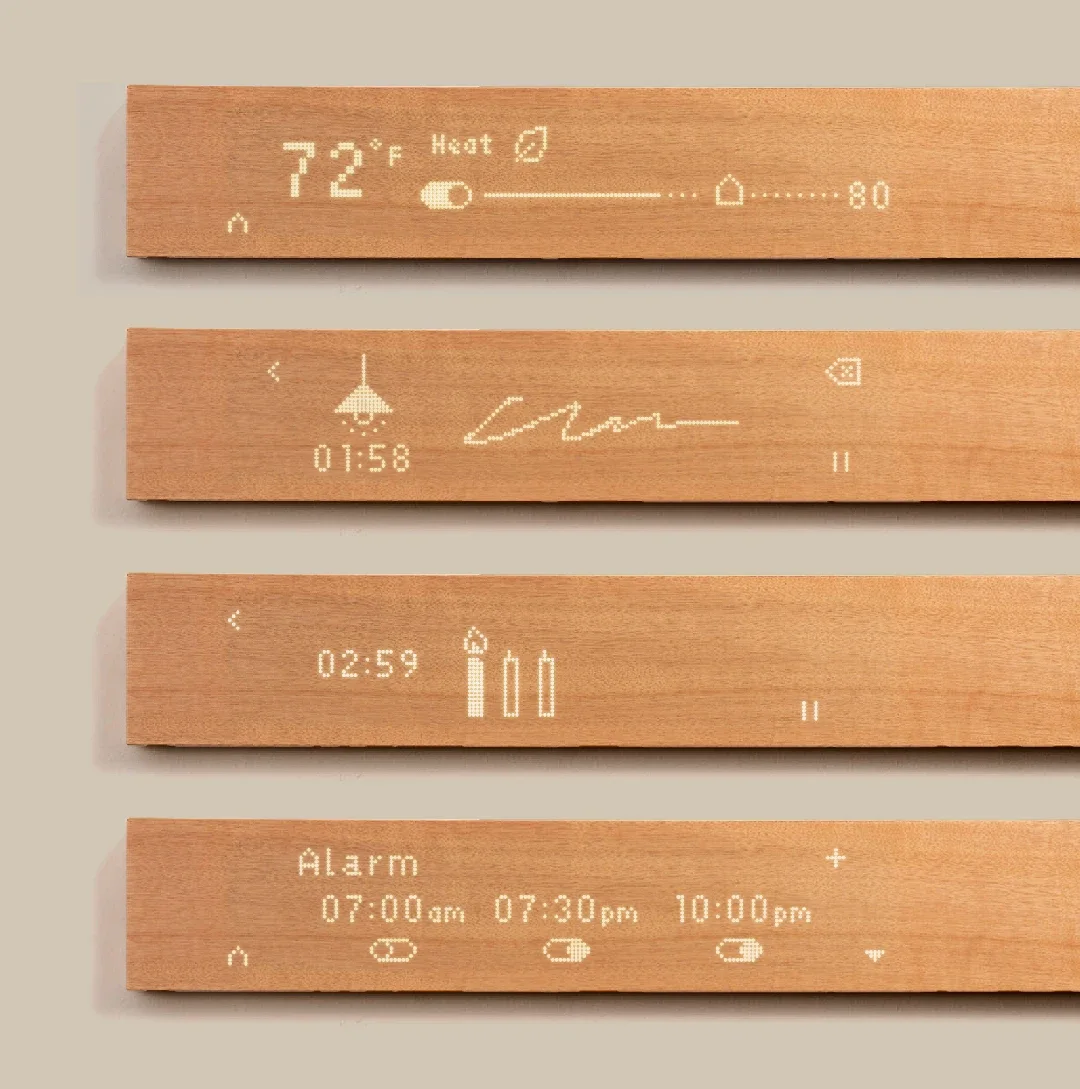
I asked where they got it, and coincidentally the company that made it was headquartered nearby. It's called Mui Board, based right there in Kyoto. So naturally I dragged my entire family across the city to go knock on the glass door of a startup that was not expecting visitors.
Two very confused Japanese women greeted us. We explained that the hotel had sent us and that we wanted to see what they made. They politely asked us to take off our shoes, and we joined them in the main space of their headquarters. They showed us their boards and explained what they were building. The whole time, I kept noticing the same thing: it didn't feel like another screen demanding my attention. It felt like a natural object that happened to be useful.
That piece of wood has stuck with me, because I think it points at where all of this is going, or at least where it should go.
"The most profound technologies are those that disappear."
Here's my argument: the endgame of AI, the most powerful technology we've ever built, is not more technology in your face. It's less. The best possible future is one where you stop noticing it entirely.
The noise problem
As a tech enthusiast, I think it's important to not only push for what's possible, but to understand what role technology should play in our lives. Is all of this helping us, or hurting us? Are we molding it to suit our needs, or are we changing the way we live to suit the technology?
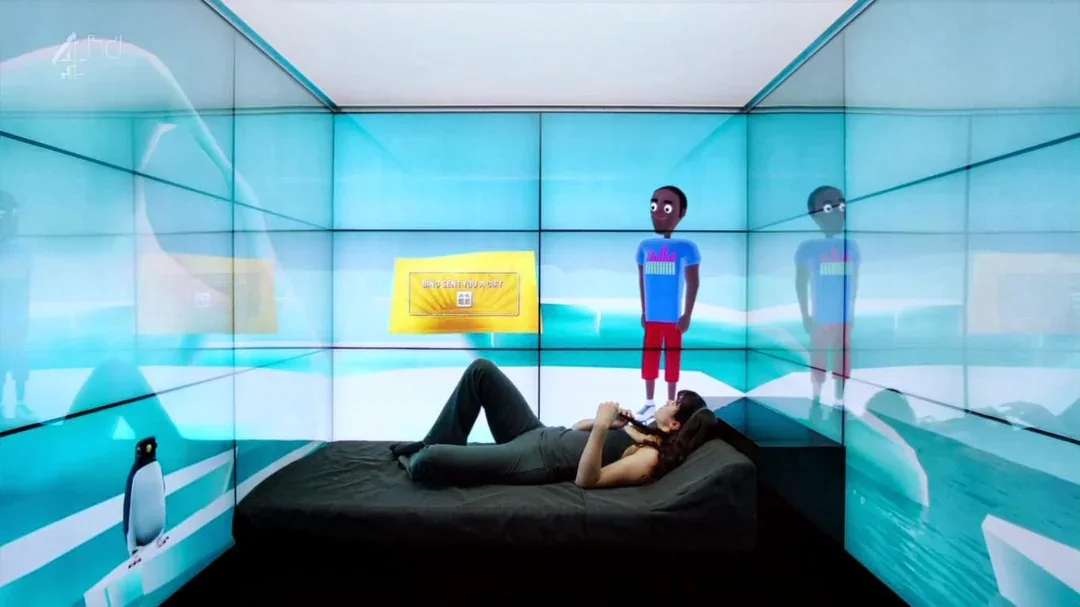
Black Mirror, “Fifteen Million Merits” (2011).
Our collective digital habits are getting worse. The average person has over 5 hours of daily screen-time. That's nearly a quarter of your day. Every app is engineered to pull us into its own world and keep us there. Social media and smartphones have their advantages for sure, but they have also added an absolute mountain of noise to everyday life. I'm 100% guilty too, obviously. I have watched some absolute mind-numbing crap on YouTube Shorts.
People are not totally oblivious. Between 2021 and 2024, "dumb phone" sales among 18-to-24-year-olds jumped 148% while smartphone use in that group actually dropped. I'm glad people are doing something about it.
The answer isn't to reject technology. (No shade to the Amish). AI is here, it's not going anywhere, and it will only become more capable. Pandora's box is open. What's our response to it? And I think its real utility is the opposite of what every app has trained us to expect. AI can centralize and simplify the noise. It can act as a Sherpa through the mountain of data. The best version won't demand more of our attention. It will move into the background.
Solarpunk
A while back I stumbled across a movement called solarpunk. It's part art form and part vision of the future: cities with more trees, buildings covered in moss, local farms, and advanced technology woven into a lush natural environment. These futuristic cities look almost like jungles.
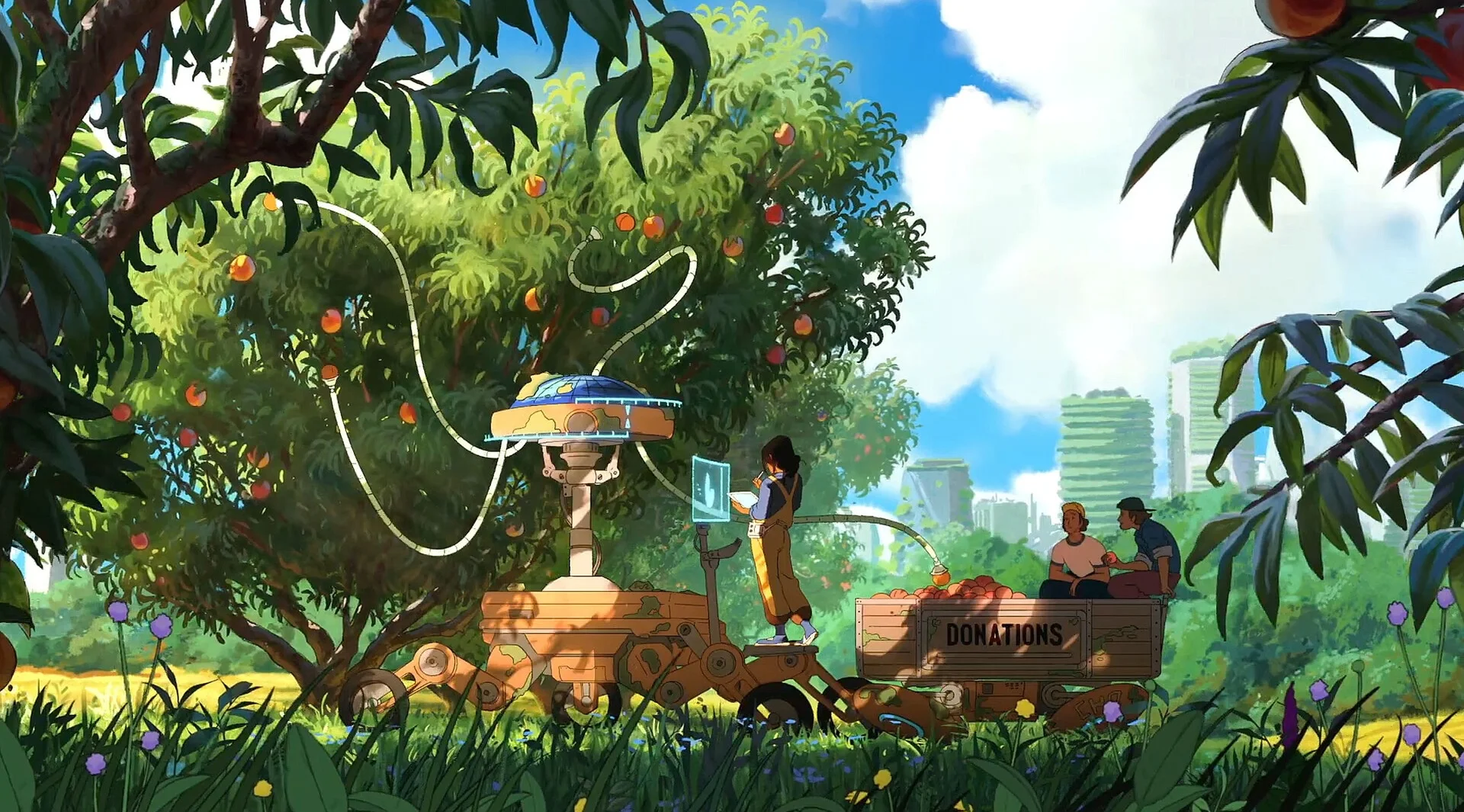
Image from Daniel Clarke.
What strikes me is that this future does not look more complicated. It looks more humble. People seem more connected to nature and community. The technology is everywhere, but you barely notice it.
What's funny is that the best example of solarpunk I've ever seen is a Chobani commercial. In the wise words of the top comment:
"I can't believe the best Solarpunk media we have is a fucking yogurt commercial."
— @jesselindsey9760
Solarpunk presents technology as an invisible extension of nature, something that helps us return our focus to community, curiosity, and being human. It's the Mui board, scaled up to a civilization.
The last interface
The next generation of the smartphone won't be a grid of apps. It will be a context-gathering device with one chat-like interface that manages everything behind the scenes.
I've already been living a small version of this through my second brain, and it works. I give an assistant access to the different sources I use to manage my life, then ask it to find information or take action across them.
Think about what it takes to get home from a bar right now: unlock your phone, find the app, wait for it to load, type your address, compare ride tiers, watch the surge pricing, confirm the pickup point, then repeat half of it in the other app to check if it's cheaper. That's a lot of taps for "I want to go home." Soon you'll just say that sentence, and your assistant will compare the options behind the scenes and come back with: "A car will be here in two minutes, you lazy ass drunk man."
A lot of services will eventually be designed more for our AI assistants than for us. The AI will deal with the interfaces, compare the choices, and carry out the boring steps. We will just decide what we want. Or ask our AIs what we want. Kidding (sort of).
I would be perfectly fine if my phone eventually became little more than an earpiece I used when I needed it. I'd happily give up my mobile screen. And the same logic scales past your pocket. A solarpunk city is just this idea at the scale of a civilization: intelligence woven into the buildings, the streets, and the power grid, working quietly underneath everything, the way our infrastructure already does.
Which brings me to the sewer.
The sewer test
The most successful invisible technology in history is not the smartphone or the search engine. It's the sewer. It performs one of the most essential functions of modern civilization, twenty-four hours a day, under every city on Earth, and you have probably not thought about it once this year.

Work, Ford Madox Brown, 1852–65. Manchester Art Gallery. Public domain.
It turns out AI and sewers have more in common than I intended.
But here's the thing: sewers earned their invisibility. They're inspected, regulated, mapped, and owned by the public. There are codes, engineers, and elected officials on the hook when they fail. The sewer gets to disappear from our minds precisely because we made it accountable first. Invisibility is a privilege, and accountability is the price.
AI has not paid that price yet. It's built from training data and reinforced by people who decide what a good answer looks like. In a certain sense, it's trying to predict the message we want to receive. When a system like that moves into the background of everything, the people who direct it hold enormous quiet power. And invisible systems still shape behavior even when we stop noticing them. If something were always monitoring your health, would you take more risks? Would you become paranoid about your metrics? Would you start living for the system instead of letting the system support your life?
So this is my standard for any technology that wants to fade into the background. Call it the sewer test. Can we see where our information lives? Can we audit what's happening behind the scenes? Can we swap out the pieces we don't trust? A system that passes gets to be infrastructure. Invisible should never mean mysterious.
Then it should disappear
Technology isn't inherently good or bad. I can use a hammer to build a house or for violence. The question is what role we allow it to play. We now have tools that feel almost godlike in their capabilities. We can use them to make life noisier, more addictive, and more disconnected. Or we can use them to make life healthier, richer, and more human.
I keep coming back to that piece of wood on the concierge table in Kyoto. It knew the time and the weather. It asked nothing of anyone. It just sat there, quietly useful, and let everyone in the lobby get on with their lives.
The best technology should help us return our attention to the world around us.
Then it should disappear.